In the rapidly evolving landscape of AI-assisted software engineering, we routinely fall into the “specs-to-code” cycle: a frustrating endless cycle of prompt engineering, trying to perfect instructions rather than engaging with the messy, architectural reality of our thoughts and of our projects.
The reality is that the specs-to-code approach currently doesn’t work very effectively. LLM’s lack the contextual knowledge, but until the technology evolves, we must find more deliberate ways to work with LLMs.
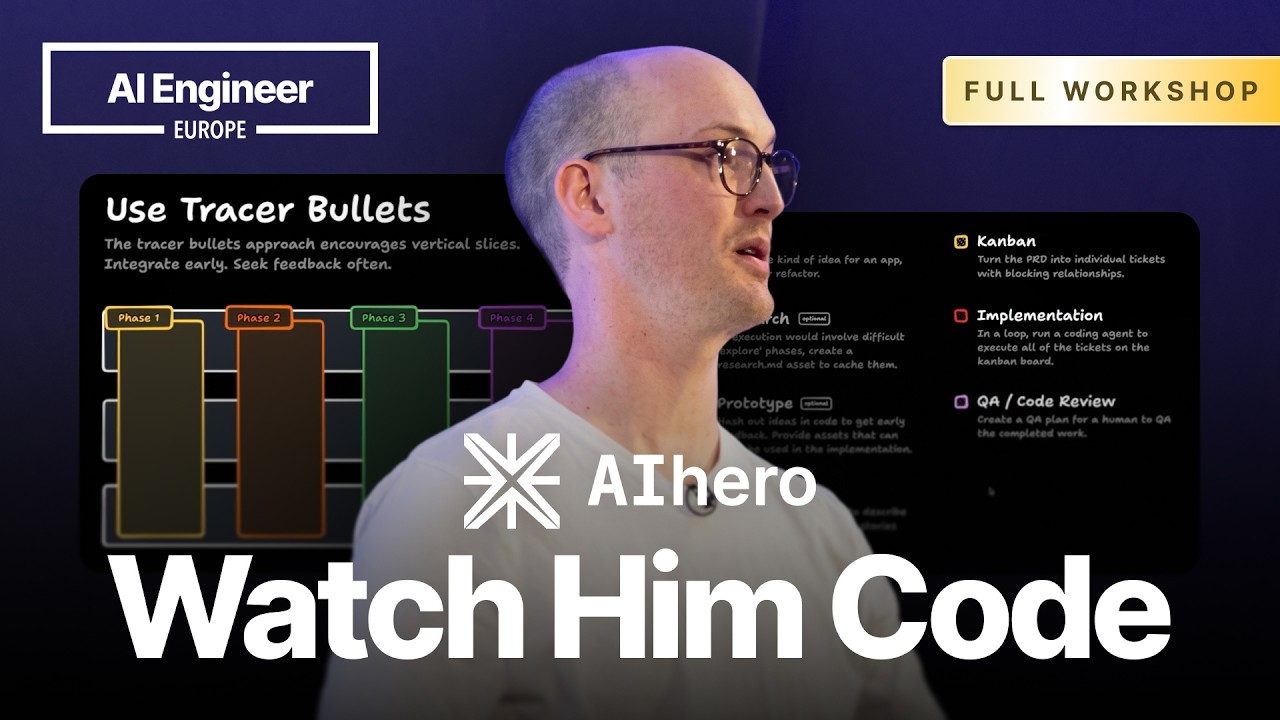
Matt Pocock highlighted in a recent workshop that this circle can be done more successfully, by using the “Grill Me” skill.
Full Walkthrough: Workflow for AI Coding — Matt Pocock https://www.youtube.com/watch?v=-QFHIoCo-Ko
With this skill you can move from a cycle of fixing broken implementation, to a cycle of refining and clarifying intent, but its most surprising impact might actually be on team dynamics!
The De-Personification of Design
When we seek feedback from human colleagues, architectural reviews can carry heavy social baggage. As I explored in an earlier article: Asking questions and negative perception, human inquiry is a natural but rarely a neutral act. In the milliseconds after a direct question is asked, our subconscious “System A” associative memory fires up. We immediately start evaluating hidden context:
- Is the timing inconvenient?
- Are there ulterior motives or past mistakes colourising this interaction?
- Is the directness of this question breaking a certain cultural or hierarchical boundary?
Because of these variables, the danger of human questions being perceived as negative is remarkably high. Not to mention engaging in an enquiry with the purpose of getting a straightforward answer requires a massive amount of deliberate empathy, trust-building, and psychological safety.
By outsourcing the critique to an AI, you can alleviate that possibility completely!
The AI becomes a neutral mirror: an ego-free sounding board that objectively reflects technical gaps and architectural blind spots without motive, malice, or the systemic anxieties of human-to-human questioning.
Why This Workflow Alters the Engineering Lifecycle
When you shift the AI from just a code output machine to a rigorous interviewer, your development process transforms in three distinct ways:
- Psychologically Safe Exploration: Because humans don’t attach personal motives to machines, it becomes more safe for the human to not know something, to be wrong, to be confused, or to have the opportunity to pivot radically the conversation. You bypass the “negative perception” loop entirely, unlocking more honest, high-velocity design iterations.
- Forced Conceptual Clarity: The AI doesn’t just generate a plan; it forces you to align on a bulletproof design concept. By questioning aspects such as data structures, state management, scale assumptions etc., it exposes edge cases you would have otherwise discovered painfully during production.
- The Leverage of Strategic Ambiguity: You retain total control over the depth of the feedback loop. You can still give loose “non-answers” to see where the AI probes next, or intentionally steer it towards specificities of your architecture. You still remain the undisputed system architect, and the AI is simply sharpening your tools.
Moving Beyond “Vibe Coding”
Treating AI as a code generator only leads to a superficial, vibe-based approach to software development -“Vibe Coding”. It feels fast right up until the moment the architecture collapses under its own weight.
The “Grill Me” skill introduces a mature, highly intentional human-in-the-loop engineering process. It keeps your hands firmly on the wheel as the architect while offloading the cognitive overhead of mapping out every single “what-if” scenario.
Ultimately, this workflow isn’t just about speed, it is about clarity. By actively embracing the healthy friction of an AI grilling session, you ensure that the codebase you eventually build is robust, testable, and deeply understood.
The TLDR:
Human design reviews necessitates human to human questions, which risks falling into “negative perception” traps. With AI asking the questions, this eliminates the risk of negatively perceiving another human, saving human-to-human collaboration for higher-level & high-trust strategic alignment.
Embrace the friction; enjoy the results.
https://github.com/mattpocock/skills/blob/main/skills/productivity/grill-me/SKILL.md