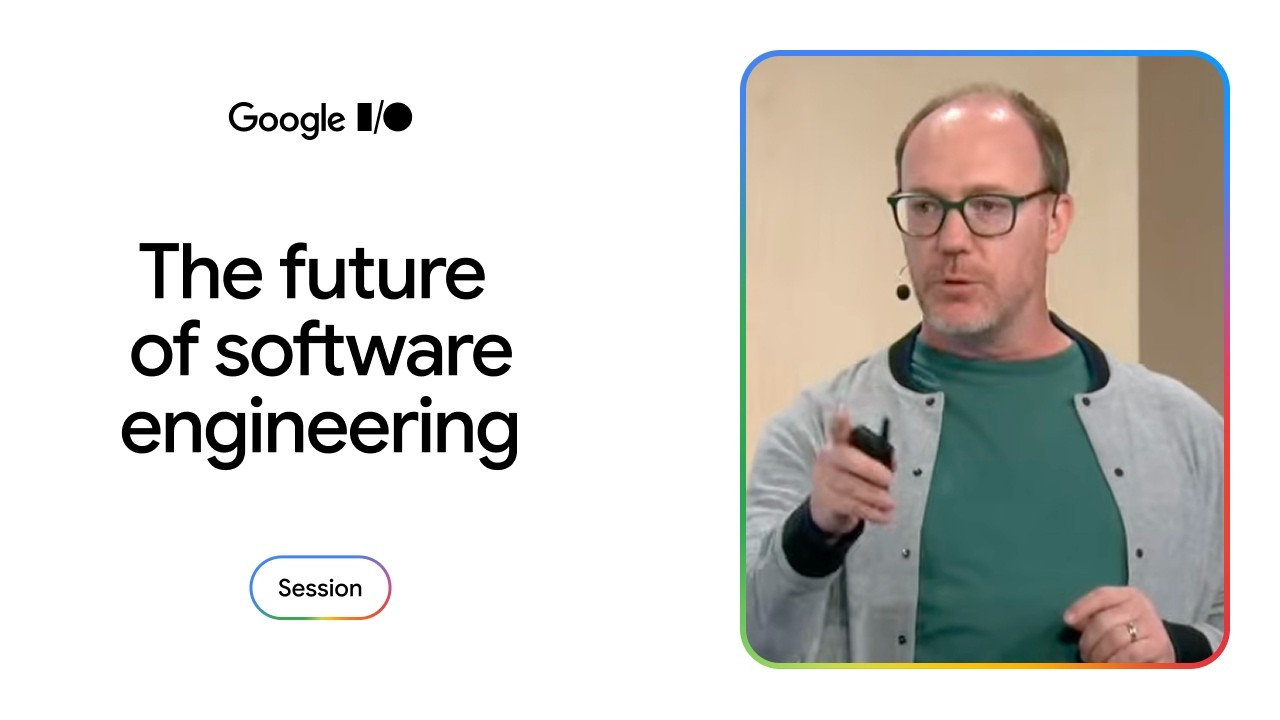
Today I watched an incredible Google I/O presentation by Adam Bender titled “Software Engineering at the Tipping Point.” It perfectly articulated something I’ve been thinking about a lot: as AI automates the “how” of writing code, our jobs are rapidly shifting toward the “why.”
For decades, as software engineers, we have poured our values, our ethos, and our intentions into products through our code. We used our techne—our technical craft—to express what we valued. We valued mastery over specific languages like Kotlin or framework architectures.
But as Adam pointed out, AI can now generate code 10x faster. It acts as an amplifier—a magnitude, not a direction. It doesn’t care where the code goes or what purpose it serves. It just gives you more of it.
This brings us to a socio-technical crossroads. If anyone can use AI to build a tool, tooling itself becomes interchangeable. What cannot be duplicated is human judgment and reasoning. The real engineering challenges of tomorrow are philosophical and structural:
- What are the ethical and technical dilemmas shaping our architectures?
- What trade-offs do we actually value when software becomes a 10x larger liability to maintain?
- How do we maintain “intellectual control”—the ability for a human to actually reason about the massive systems in front of them?
Practices and tools will change rapidly. Principles will endure. Our true agency as engineers isn’t found in writing lines of code any more, but in steering them. By mastering the core fundamentals -technical strategy, system design, code health etc.- we ensure that when AI amplifies our output, it moves our systems forward instead of just multiplying our tech debt.
What principles are you anchoring your team to as the tooling shifts beneath us?
Software engineering at the tipping point https://www.youtube.com/watch?v=2n41YjR5QfU